Tahoe Truckee | Residential Design · Land Use Planning · Commercial Tenant Improvements · Permit Plans

New residential constructions, accessory dwelling units, remodels, additions, and renovations - MASTRIDICASA can handle all of your project needs.
Serving the Lake Tahoe-Truckee area primarily, as well as Napa, Sonoma, Marin, San Francisco, and most jurisdictions throughout the United States, MASTRIDICASA provides a complete array of residential and commercial design, planning, and construction document/building permit plan preparation services, as well as numerous support services such as project planning, consulting, photo-real rendering, and as-built measuring to name a few.
These services are provided for homeowners, business owners, contractors, real estate agents, and other industry professionals; we serve the entire community.
At MASTRIDICASA, we make the design process simple...
Driven by client goals
Informed by experience
Guided by icons of architecture
Short answer - No and no.
Did you know that Frank Lloyd Wright was never a licensed architect? And no, we're not comparing ourselves to FLW. Just making the point that great design skills don't originate from possessing a title.
As strange as it sounds, California and most other states do not require anyone to be a licensed architect to design and create the building permit plans for most residential and certain commercial projects. See California Business & Professions Code Sections 5537, 5538, 6737.1, and 6745 as examples in California. Most states have similar civil code sections; some have square footage limitations, some have height limitations, etc. For scopes of work that may fall outside of the limitations placed on us, MASTRIDICASA collaborates with registered design professionals to fulfill all of the requirements mandated by law.
In California, all that is required is that the person who prepares the plans signs them (Sec 5536.1) for liability purposes. Just because you're not licensed doesn't mean you don't have to own it. Unlike most "drafting services", MASTRIDICASA carries professional-grade E&O insurance, the same kind licensed architects and engineers have. It costs an unlicensed designer about 3x what a licensed design professional pays for the same coverage. We consider the expense the cost of doing business properly and ethically.
MASTRIDICASA coordinates and collaborates closely throughout the design process with a select group of local consultants - civil, structural, mechanical, and geotech engineers, energy code specialists, and, when required, expert planning professionals. Working together, the design team provides a comprehensive set of superior construction documents tailored to your jurisdiction's requirements.
After 40+ years of AEC industry experience and leadership roles in the field and the office, asking many questions and paying attention, staying up on the latest construction methods, materials, and best practices through close collaborations with the builders MASTRIDICASA works with...
"It takes a village" applies to the whole process of taking your vision from concept to final certificate of occupancy. The designing is but one small part.
Most any kind... brand new residential constructions, remodels, additions, commercial tenant improvements, design-build projects. Most any size, most any scope of work.
If you can envision it, MASTRIDICASA can design it and prepare the construction documents to get your building permit.
In the words of Mr. Frank Lloyd Wright - "Regard it as just as desirable to build a chicken house as to build a cathedral..."
At MASTRIDICASA, there are no insignificant projects; there are no "lesser" design projects. From the smallest remodel projects to the multi-million-dollar estate and private compound projects, it's an honor to help facilitate a client's wishes for their project, regardless of its size or scope of work.
Simple. We're not after your money, we're after your satisfaction. We don't do this for the love of money; we do this for the love of the craft.
By employing the same state-of-the-art software, hardware, and design processes as high-end architecture firms, while eliminating many of the common overhead expenses associated with maintaining a larger office and a multitude of staff, MASTRIDICASA can offer a level of service that rivals expensive design firms without the exorbitant prices.
We keep our rates reasonable - extremely reasonable. Yes, we're capitalists, just not the very best capitalists we can be. We're not cheap, but we are a bargain, especially when you compare us to the high-priced design-haus firms. As a small office, we're not top-heavy or weighed down with massive overhead; we're immediately scalable, nimble, and aren't at the mercy of the economy.
Bottom line? We'd rather keep our prices where they are and design more projects.

2025
Starting at age five, our father, a principal for a highly esteemed multi-disciplinary AEC firm, would take us for ride-alongs on the weekends to job sites. There was a round house that still stands there today - a perfect circle with a staircase along the interior wall leading to a flat roof deck. That house evoked a feeling of indescribable giddiness in us that still drives us today. After that ride-along with Dad, we spent quite a bit of our "inside" time drawing houses on graph paper. At age 12, a state-issued work permit allowed us to start drafting for our father's AEC firm. The rest is history.
After decades of working for several well-respected large multi-disciplinary AEC firms on both the East and West coasts, as well as several smaller offices, it seemed obvious that a void existed that needed to be filled. A residential design service that provided the same detail-oriented, top-tier performance for discerning clients who desired a white-glove experience, all at a price point that was palatable for the 99%.
In 2015, MASTRIDICASA Design Works was established for this very reason - to provide bespoke, cost-effective residential and commercial design services, as well as building permit plan production and a host of other support services, for all those who seek the very best value in this discipline, making stunning design accessible to anyone and everyone who seeks it - no matter their budget.
YOU DESERVE A BEAUTIFUL SPACE...
MASTRIDICASA would love to help you make that possible.
Sincerely,
Douglas A. Mastri
Owner / MASTRIDICASA

MASTRIDICASA Design process...
Driven by client goals
Informed by experience
Guided by icons of architecture

The Design Process
Simplified...
At MASTRIDICASA, the design process philosophy can be summed up in one word: simple.
-
LISTEN - without bias
-
DISTILL - establish a clear vision
-
APPLY - timeless principles from the icons of the architecture industry
-
NURTURE - a collaborative atmosphere between client, designer, design team consultants, and contractor
-
CALIBRATE - throughout the design-development phase via careful measuring of feedback and critical analysis until the client's vision is realized
Every client, every project, every site, every budget... all unique, all requiring a unique design solution and critical path forward to fruition.
MASTRIDICASA does not design for the portfolio, for the glamour shots, for the accolades of others - every design is specific for the client and the client alone.
The goal is always to create a beautifully functional, appropriate, and intuitive space designed around the way a client lives their everyday lives, reflects their unique lifestyle, and integrates a responsible design holistically and sustainably with the surrounding environment - all at a palatable price point, both in the development of the design documents, as well as the construction costs.
In the spirit of "keeping things simple" - the iconic architects that guide every MASTRIDICASA design, in their own words...
It's very easy to take a project too far past the budget, past the needs, past the desired goals. Discipline in restraint with a constant eye towards economics and construct-ability is more than a mantra. MASTRIDICASA does not design for the portfolio, for the glamour shots, for the accolades of others - every design is specific for the client and the client alone.
Each unique design manifests organically throughout the process by the following:
-
listening attentively without presumption
-
establishing a clear vision of the project goals: end user requirements, aesthetics, timeline and budget
-
nurturing a collaborative atmosphere between client, designer, design team consultants and contractor
-
calibration throughout the design-development phase via careful measuring of feedback and critical analysis until the vision is realized
-
drawing on past experience, current building practices, local wisdom, and understanding the logistics of navigating local jurisdiction review processes.
MASTRIDICASA approaches a project differently than most designers and architects. Drawing from decades of field and office experience as a design team member, collaborating with the various AEC industry disciplines - having been the boots on the ground laying out and building the project, to the office project manager responsible for "herding the cats". Too narrow a focus can drive a project in the wrong direction very quickly. Too broad of an overview can lead to designs that never remedied the immediate needs and requirements for the project to begin with.
Starting with your budget - dictating all design decisions and guiding the path forward. Finding the correct ratio of labor, materials, and technique to provide the most cost effective solution for your desired outcome, and meeting every objective set forth by the project goals.
Analyzing the site - environment, topography, climate, orientation, natural patterns of movement, solar exposure... benefits and hindrances altogether at once. Formulating all of these variables into a solution that properly accounts for the economic boundaries, desired aesthetics and project priorities - the solution requires a deep knowledge base, extraordinary creativity and an unrestrained, yet disciplined, freedom of thought.
Expressing meaningful forms and scale through space and mass, factoring in proportions, circulation patterns, planned uses, materials and methods, creating a suitable composition in efforts to control the environment without working against it, harnessing the benefits while maintaining an equilibrium, and creating a harmonious spatial dialogue that is relevant to both its end-user and those who may come after.
Interacting with the natural light through its movement and ever changing ephemeral qualities, using void and mass to channel and restrict, texture and relief to mute or amplify, and thoughtful geometry to further capture a specific quality or evoke a certain emotion.
Striving for innovation and a sense of place within its physical and social context with an eye towards timelessness, manifesting an appealing visual rhythm, an appropriateness, uniqueness and inherent functionality by design that reflects the personality of the occupants...
MASTRIDICASA Lake Tahoe + Truckee Design, for the LOVE of all things architecture and design...

SERVICES
COMMERCIAL
Regard it as just as desirable to build a chicken house as to build a cathedral.
There are no "insignificant" projects...
For a designer, the size of a project should mean little. The creative challenge and integrity of a design are the true measures of its value, not the budget or fame associated with it. The same passion and skill should be applied to all work, regardless of its scale. The true measure of a building is the quality of its "character." That character, and the architectural principles behind it, can be found in a small and humble structure just as much as in a large and monumental one.
This quote serves as a personal reminder to focus on the basics and never become so preoccupied with grandeur that our craftsmanship suffers.
No matter how small or grand the scope of work, MASTRIDICASA will assist you in taking your project from concept to construction, expeditiously and efficiently.
Frank Lloyd Wright, Architect
Recognizing the need is the primary condition for design.
Being a good listener and understanding what people really need - something often glossed over in the curriculum.
Taking what we hear from our clients and understanding what their unique needs are, interpreting that dialogue, and applying that information to the concept phase is paramount to starting a project correctly. Prioritizing the need rather than making something "look good". As Eames famously said, "What works is better than what looks good," because "the looks good can change, but what works, works".
The best design starts with the human being, not for ego or financial gain. The work should be guided by an understanding of how people actually live, not how we as designers think they should live.
When the need is clearly identified, the constraints and purpose for the design are established. The resulting form, function, and aesthetics then follow logically from that initial purpose.
The quote serves as a guiding principle that grounds our designs in real-world necessity.
Charles Eames, Architect
SERVICES
COMMERCIAL


SERVICES
COMMERCIAL
The architect must get to know the people who live in the planned house. From their needs, the rest inevitably follows.
A principle of architectural philosophy that emphasizes functionality and simplicity in design, centering the purpose of a structure on the lives of its inhabitants, reflecting the core idea that good architecture is not about imposing a preconceived style. Instead, it is a response to the specific needs, habits, and desires of the people who will use the space. In this view, the "rest" (the floor plan, materials, and form) is a natural and organic outgrowth of the client's human requirements.
The purpose of a building should determine its design and focus more on the human experience rather than pure utility, thus putting the human experience at the center of the design process. Architecture should be in harmony with its context - the most important "context" is the human one.
Mies van der Rohe is also famously known for the phrase "less is more". When seen alongside the quote about understanding the client, it's clear that this minimalist approach is not a stylistic choice for its own sake. Rather, it is a way of stripping away the unnecessary to reveal the pure, functional elements of a building that serve the human experience. The "less" is a distraction-free space that allows the person and their needs to become the focal point.
Ludwig Mies van der Rohe, Architect
I can't just decide myself what's being built. Someone decides what they want, then I work for them.
We love Frank Gehry. Not necessarily his work, but his attitude. Frank is frank... not subtle. Direct.
The statement reflects the fundamental role of a designer within the client-driven process of design and construction. You can have a vision, but practical constraints and a close working relationship with your clients are what drive the project in the proper direction. You begin with a client's vision and a clear set of needs.
Even the most revolutionary designer must work within established systems. Channeling an artistic vision while working for, not independently of, your clients is a tension we personally embrace. If it were easy, anyone could do it.
At the end of the day, this is your project, your aesthetic, your wishes - not ours. In all honesty, we've designed plenty of things we didn't really like personally, but none of this is about us - it's ALL about you. At the end of the project, all that matters to us is that we fulfilled our job in creating the exact solution that you're most happy with and can afford to build.
Frank Gehry, Architect

SERVICES
COMMERCIAL

SERVICES
COMMERCIAL
Your goal is to achieve the best results by following their wishes. If they want you to build a house upside down standing on its chimney, it's up to you to do it.
Richard Morris Hunt, Architect
This couples directly with the notion above.
"We serve at your behest and pleasure" is not a nicety we tell clients - it's how we work, no exceptions.
There are easier paths and less costly paths, but for MASTRIDICASA, there is but one path - achieve your vision with all diligence. It is our professional view that the client's wishes, budget, and satisfaction take precedence over our own artistic preferences. Designers should sacrifice some of our artistic preferences to serve the client faithfully.
There's another famous quote that goes something like "sometimes we architects ignore our client's request for their own good". We've worked for some who subscribe to that notion, and that prevailing sentiment was the driving force behind the inception of MASTRIDICASA.
Your requests will NEVER be ignored if you decide to work with us.
Architecture begins when carefully you put two bricks together. There it begins.
One of our favorite architects.
You have to start a project somewhere. If we've done our listening and actually heard you, understand your needs and the project's constraints, together we can then begin to carefully craft the design - the word "carefully" is critical. It implies that every decision and action, no matter how small, is a mindful and precise part of a larger, well-executed design.
Architecture is not simply about grand, monumental structures. It begins with a keen understanding of the fundamentals of construction. The deliberate joining of materials becomes the central architectural statement. This is a reflection of another famous Mies aphorism, "God is in the details".
It's not hard to design a "cool looking" structure - it's not, don't let anyone fool you. Just look at the dumba** AI-generated images you see all over the internet. We cringe at those things daily. Cantilevers that could never be built in the real world without great expense, roofs pitching into walls making for a waterproofing nightmare down the road, enough glass to roast a meal in an hour... we digress.
It's an altogether different endeavor to design a "good feeling" space.
A space that makes your soul smile.
The kind of smile you can't wipe off your face.
It all "begins when you carefully put two bricks together"...
Ludwig Mies van der Rohe, Architect

SERVICES
COMMERCIAL

SERVICES
COMMERCIAL
I work from the inside out.
Frank Gehry, Architect
...and from the ground up.
For us, there is NO other way to effectively and organically design a structure that is intended to functionally interact with the site, its inhabitants, and bring joy and harmony to a client's life. A building's purpose and the needs of its occupants are the starting points for all of our designs. Rather than beginning with a visual concept or an impressive exterior, the focus is on how the building will be used and how people will experience the space inside. The resulting exterior forms are a "finished product that looks inevitable somehow," a natural outgrowth of the interior needs.
The interior and exterior designs are developed in tandem, influencing one another through a constant process of exploration and iteration. The ultimate goal is to create spaces that are humanistic and enjoyable for people to inhabit. Architecture should evoke a sense of wonder and connect with people on an emotional level, but in every aspect - work.
And that begins from the inside...
The space within begins the reality of the building.
Coupling this follow-up principle with the aforementioned. Wright achieved this concept in his designs by "destroying the box".
This is a core architectural principle, asserting that the function and feeling of a building are defined not by its walls, roof, or facade, but by the interior space it encloses and creates. The experience of the person moving through and living in the space is the ultimate purpose of the structure, and the interior is the place where this experience happens.
We don't design from the outside in; we destroy the box. We typically avoid forcing a design based on an exterior constraint unless necessary. When that is the case, it's our job to find the ideal design solution. It may take a few iterations, but "good enough" is never satisfying. We'll always insist on taking our time throughout the design development process. Slowing things down to create the optimal design solution is worth every hour we save by delaying the start of construction. You'll be living with these decisions for an infinitely greater time than the time saved by rushing the process.
Another quote credited to Wright - "You can use an eraser on the drafting table or a sledgehammer on the construction site."
Let's get it right the first time - before the concrete dries ;)
Frank Lloyd Wright, Architect

SERVICES
COMMERCIAL

SERVICES
COMMERCIAL
Space has always been the spiritual dimension of architecture. It is not the physical statement of the structure so much as what it contains that moves us.
Arthur Erickson, Architect
You'll spend considerably more time inside your home than outside. A building's true essence comes from the experience and emotional impact it creates, not just its physical form. A building's power lies in its ability to move the human spirit, nourishing the soul and creating beauty that inspires.
Being able to create that feeling for your client of "never wanting to leave home" is the secret sauce. The integration of the natural environment, utilizing elements like light, water, and greenery to evoke a sense of spiritual connection, harmonizing the built structure with its surrounding natural landscape, creates an indescribable magic.
It requires an innate understanding of volume, light, and the flow of life to create a spatial experience that captivates. Knowing when to create a sense of the space beyond, and knowing how the ever-changing lightscape will enhance or detract from a volume, knowing when a space feels right or when it evokes a less-than-optimal sensory response...
You can't be taught" these things, but if you pay enough attention over the years, they become a natural part of your design sense and process.
The ultimate goal of the architect is to create a paradise. Every house, every product of architecture should be a fruit of our endeavor to build an earthly paradise for people.
The design process should adhere to a human-centered philosophy, prioritizing comfort, functionality, and harmony with the surroundings. Architecture is more than just construction or representative art; it is a means to enhance human life and create environments that nurture and inspire, serving people's needs and improving their well-being, prioritizing their comfort and emotional state.
All of these timeless principles build on each other, and through persistent intention, culminate in a design that creates your own personal paradise.
Is "paradise" overstating all of this? Not if we use the definition from The Cambridge Dictionary:
"a place or condition of great happiness where everything is exactly as you would like it to be"
This is what all our designs strive for: a synthesis of life in materialized form, where all aspects work together in harmony, a perfect balance between aesthetics, functionality, and nature.
Architecture is our way of making your life more beautiful.
Alvar Aalto, Architect

SERVICES
COMMERCIAL
SERVICES
COMMERCIAL
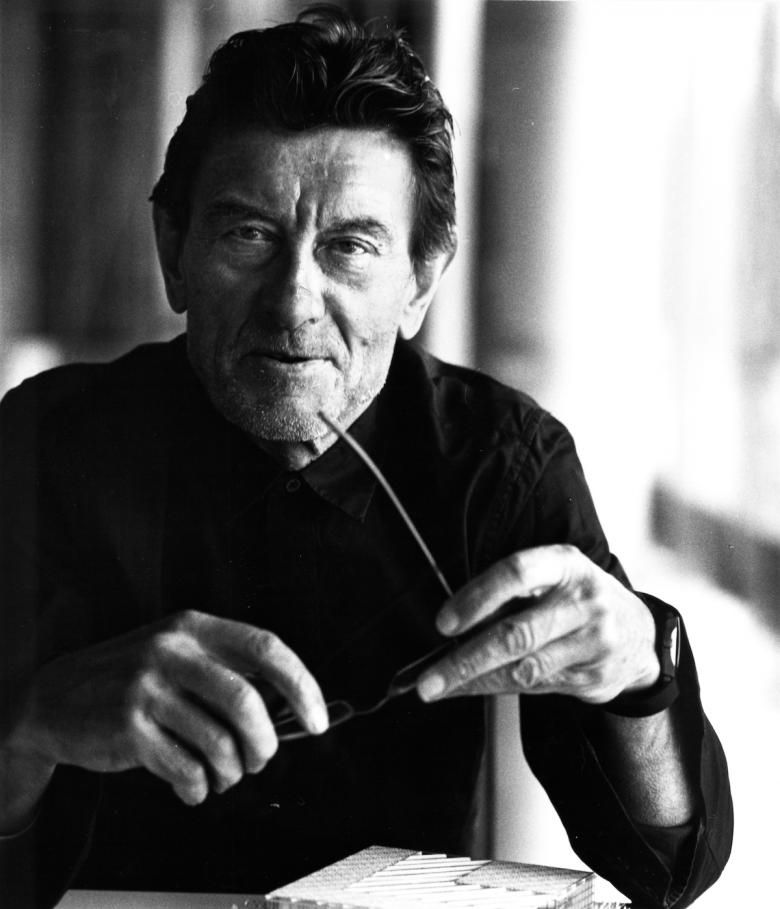
Creativity has more to do with the elimination of the inessential than with inventing something new.
Helmut Jahn, Architect
Couple this with Leonardo Da Vinci's "simplicity is the ultimate sophistication"...
This perspective on creativity contrasts with the popular notion that innovation is solely about producing something entirely novel. Instead, it frames the creative design process as a form of skillful editing and distillation. The core idea is that a great design is not one where nothing can be added, but one where nothing can be taken away. By removing superfluous details and ornamentation, the designer can achieve a purer, more powerful result.
Our aesthetic is bordering on minimalist. Not stark, cold, or barren - we simply (no pun intended) find simple lines to be the most peaceful and relaxing. Through this lens, our designs will always start with the simplest way to get from A to Z. Eliminating the "inessential" means stripping away elements that do not improve the building's comfort, efficiency, or experience for its occupants. The creative process is less about a single "eureka" moment and more about refining and iterating on ideas. The truly creative act is often the final act of editing that brings an existing concept into its final, most powerful form.
This approach most often results in the most cost-efficient way to build any structure, something most of our clients appreciate.
The architect should strive continually to simplify; the ensemble of the rooms should then be carefully considered that comfort and utility may go hand in hand with beauty.
Building on the previous premise, and in combination with Le Corbusier's quote that "a house is a machine for living in"...
Putting all of the moving parts together results in a beautiful, synergistic whole that works for you, your lifestyle, and the way you live your life. An "organic architecture" approach, which seeks to create structures that are in harmony with both humanity and the natural environment.
Simplicity is not necessarily a minimalist style, but a courageous and spiritual act of reducing a building to its core, essential components. Rather than compartmentalizing a house into a large number of separate rooms, a building should have only as many rooms as necessary to meet the needs of its inhabitants. The overall flow and relationship between these spaces are paramount. Form and function should be one, joined in a spiritual union.
The design should serve the practical needs of the people living in the building while simultaneously enriching their lives with its aesthetic qualities. Beauty enhances life by improving mental and physical well-being, fostering a greater sense of meaning, and inspiring creativity and inspiration. Experiencing beauty, whether in nature, art, or everyday moments, can trigger positive emotions, reduce stress, increase gratitude, and shift one's perspective toward a more positive outlook.
An architecture that integrates comfort, utility, and beauty is more than just a shelter; it is a "great moral performance" and a blessing to life.
Frank Lloyd Wright, Architect

SERVICES
COMMERCIAL

SERVICES
COMMERCIAL
The primary factor is proportions.
Arne Jacobsen, Architect
Good design rests on a "total" concept where every element should be scaled to the rest. Achieving the correct proportional relationships between the parts is the fundamental starting point for any successful design.
By focusing on proportion, we can strip away excess ornamentation, achieving an elegant aesthetic that relies on form, rather than decoration. This simplicity contributes to a sense of the sublime, similar to architect Mies van der Rohe's "less is more" philosophy.
No house should ever be on a hill or on anything. It should be of the hill. Belonging to it. Hill and house should live together each the happier for the other.
You know it when you see it. A building that is in harmony with its natural surroundings, not simply placed on top of them, but a "unified organism". Its unique connection to that particular site means it would be out of place if built anywhere else.
For us, the site is the most important context for any project. Forget "vernacular"... if a client wants a modern masterpiece in the middle of a subdivision of colonials or Cape Cods, then, a modern masterpiece it is. But be sure of this - it will look like it belongs there, no matter the surrounding "vernacular".
The "hill" in this case, the site, will always guide the design process. Perhaps it needs to sit lightly, maybe it needs to conquer, maybe it needs to harness all of the available resources and be subject to the site. Every project is unique, as is every path forward.
Frank Lloyd Wright, Architect

SERVICES
COMMERCIAL

SERVICES
COMMERCIAL
God created paper for the purpose of drawing architecture on it. Everything else is, at least for me, an abuse of paper.
Alvar Aalto, Architect
From a very young age, when we weren't outside exploring, all we did was draw and sketch. When we discovered graph paper, it was all over. For some reason, floor plans were our passion. We can't explain it, we don't need to. It just is. You could say our career path was chosen for us when we were five.
If a picture is worth a thousand words, then you'll always find us sketching rather than writing. The physical act of drawing on paper is a fundamental part of architectural design, not just a technical step. It is through sketching and drawing, the sacred role of paper in the hands of a creator, that initial thoughts and creative ideas are explored and brought to life.
Paper and pencil are the essence and purity of the creative design process.
